
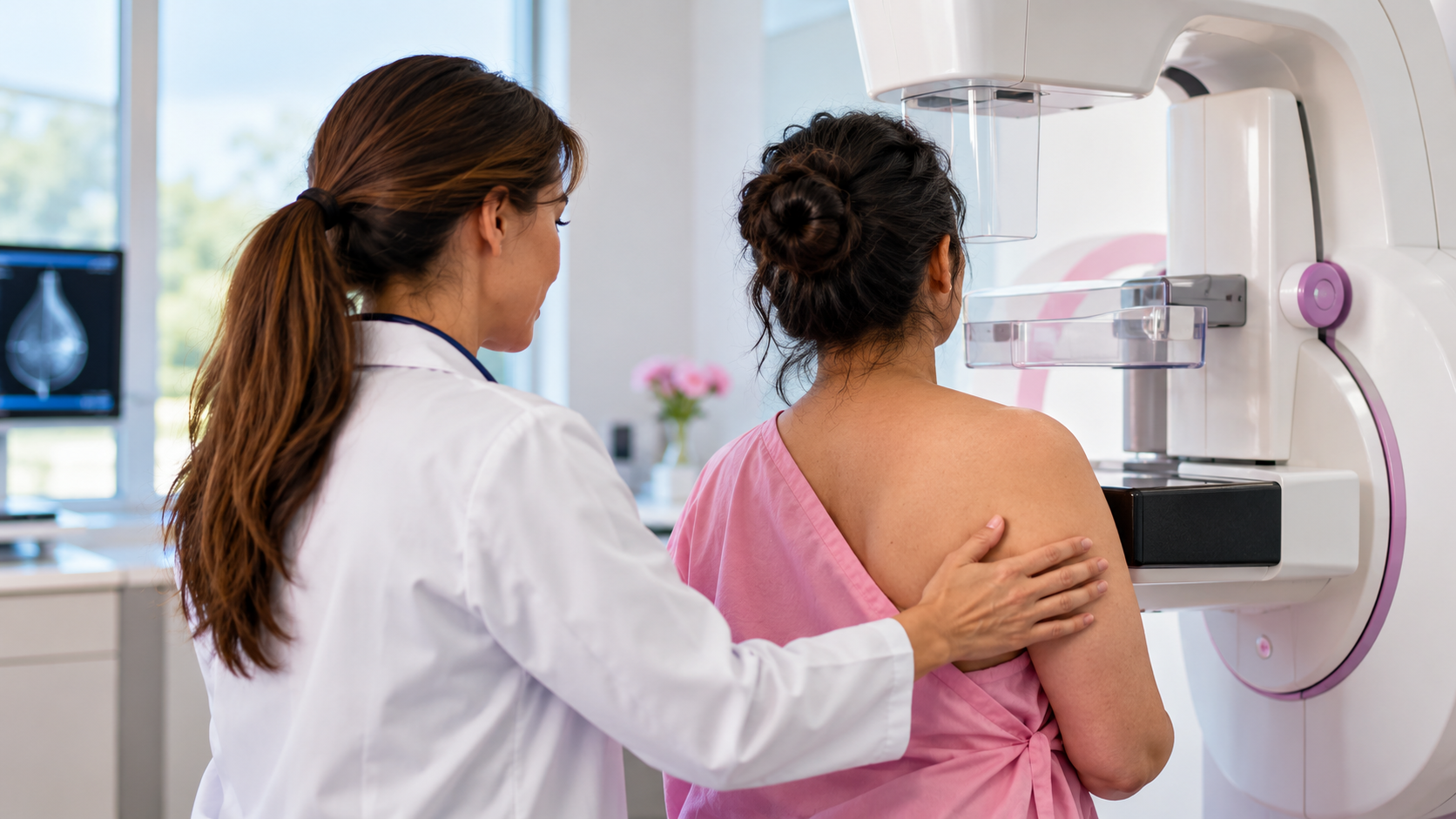
 October is Breast Cancer Awareness Month—a time to raise awareness, encourage early detection, and remind women to prioritize their breast health.
Breast cancer is one of the most common cancers affecting women in the United States. Although a breast cancer diagnosis can be frightening, early detection and appropriate treatment can improve outcomes. One of the most important steps women can take to protect their health is to stay up to date with recommended breast cancer screening.
At Allen Internal Medicine, we encourage our patients to make preventive healthcare a priority. Our providers emphasize the importance of routine health screenings, including mammograms, as part of comprehensive primary care.
If you are searching for a primary care doctor in Allen, TX, information about breast cancer screening, or guidance on when to get a mammogram, our team can help you understand your screening needs and take the next step.
What Is Breast Cancer?
Breast cancer develops when abnormal cells in the breast grow uncontrollably. These cells can form a tumor and, in some cases, spread to other parts of the body.
Breast cancer can affect women of all backgrounds, and although it is much less common, men can develop breast cancer as well.
Some breast cancers grow slowly, while others can be more aggressive. Early breast cancer may not cause any noticeable symptoms, which is why screening is so important.
You do not have to feel a lump or experience symptoms to benefit from a mammogram.
Why Is October Breast Cancer Awareness Month Important?
Every October, healthcare organizations and communities recognize Breast Cancer Awareness Month to promote education, screening, early detection, and support for people affected by breast cancer.
It is also an opportunity to encourage women to take action rather than postpone preventive care.
Many women delay mammograms because of busy schedules, fear of discomfort, uncertainty about when screening should begin, or concerns about their family history.
October is an excellent time to:
-
Schedule an overdue mammogram.
-
Talk with your healthcare provider about your breast cancer risk.
-
Review your family history.
-
Learn about breast cancer warning signs.
-
Encourage friends and family members to stay current with recommended screening.
-
Establish a regular preventive healthcare routine.
A few minutes spent scheduling a screening appointment can be an important step toward protecting your long-term health.
What Is a Mammogram?
A mammogram is an imaging examination that uses low-dose X-rays to look for changes in breast tissue.
A screening mammogram is performed in people without breast symptoms to look for breast cancer before it becomes noticeable.
A diagnostic mammogram is used to evaluate a breast concern, such as a new lump, nipple discharge, or an abnormal screening result. Additional imaging or testing may also be needed.
Mammograms can identify abnormalities that are too small to feel during a physical examination. Finding certain breast cancers earlier may allow treatment to begin before the cancer grows or spreads.
Although mammograms are not perfect and can sometimes produce false-positive or false-negative results, they remain an important tool for breast cancer screening.
When Should You Get Your First Mammogram?
Knowing when to begin breast cancer screening is important.
For women at average risk, the U.S. Preventive Services Task Force recommends screening mammography every two years from ages 40 through 74.
However, the best screening schedule can differ depending on personal risk factors, family history, previous breast conditions, and other circumstances.
Women with a strong family history of breast cancer, certain genetic mutations, or a history of radiation treatment to the chest at a young age may need earlier or more intensive screening.
Talk with your healthcare provider about the screening schedule that is appropriate for you.
If you are 40 or older and have never had a mammogram, or if you are overdue for your next screening, October is a good time to discuss scheduling one.
Why Is Early Detection So Important?
Early detection means finding breast cancer before it has progressed to a more advanced stage.
Screening mammograms can detect some cancers before symptoms develop. This matters because breast cancer treatment and prognosis depend on several factors, including the type of cancer, its stage, and its biological characteristics.
Early detection may:
-
Identify breast abnormalities before they can be felt.
-
Help detect some cancers at an earlier stage.
-
Allow treatment to begin sooner.
-
Improve the opportunity for less extensive treatment in some cases.
-
Reduce the risk of complications associated with advanced disease.
Screening cannot prevent every breast cancer death, and not every cancer can be detected by mammography. Nevertheless, recommended screening is an important part of preventive healthcare.
What Happens During a Mammogram?
Many women postpone mammograms because they do not know what to expect.
A mammogram is generally a brief outpatient examination.
During the procedure:
-
You will stand in front of the mammography machine.
-
A technologist will position your breast on the imaging plate.
-
The breast will be briefly compressed to obtain clear images.
-
Images will be taken from different angles.
-
A radiologist will review the images and report the findings.
Breast compression may cause temporary discomfort, but the procedure usually takes only a short time.
If you are concerned about discomfort, tell the technologist. You can ask questions about the procedure and discuss ways to make the experience more comfortable.
If you have breast symptoms, let your healthcare provider and the imaging center know before the examination so the appropriate diagnostic evaluation can be arranged.
Who Is at Higher Risk for Breast Cancer?
Breast cancer can occur in women without any known risk factors. However, certain factors can increase risk.
These include:
-
Increasing age
-
A personal history of breast cancer
-
A strong family history of breast or ovarian cancer
-
Certain inherited genetic mutations, including BRCA1 and BRCA2
-
Dense breast tissue
-
Previous radiation treatment to the chest at a young age
-
Certain breast conditions identified on a biopsy
-
Some hormonal and reproductive factors
Having a risk factor does not mean you will develop breast cancer, and not having risk factors does not eliminate the possibility.
If breast cancer runs in your family, share that information with your provider. Depending on your history, genetic counseling, risk assessment, or additional screening may be appropriate.
What Are the Warning Signs of Breast Cancer?
Although screening mammograms are important, women should also be familiar with changes that warrant medical evaluation.
Possible warning signs include:
-
A new lump in the breast or underarm
-
A change in breast size or shape
-
Skin dimpling or puckering
-
New nipple inversion
-
Nipple discharge, especially if bloody
-
Persistent redness, swelling, or skin changes
-
Thickening of breast tissue
-
Persistent localized breast discomfort
Many breast changes are not caused by cancer. However, a new or persistent change should not be ignored.
Do not wait for your next screening mammogram if you notice a new breast lump or another concerning symptom. Contact your healthcare provider for an appropriate evaluation. Diagnostic imaging may be necessary even if your most recent screening mammogram was normal.
Can You Prevent Breast Cancer?
There is no guaranteed way to prevent breast cancer. However, healthy lifestyle habits can support overall health and may reduce the risk of some breast cancers.
Consider the following steps:
Maintain a healthy weight. Excess body fat, particularly after menopause, is associated with an increased risk of certain breast cancers.
Stay physically active. Regular exercise supports cardiovascular health and may help reduce breast cancer risk.
Limit alcohol. Alcohol consumption is associated with an increased risk of breast cancer. Reducing or avoiding alcohol can help lower this risk.
Avoid smoking. Avoiding tobacco is an important part of protecting your overall health.
Know your family history. Understanding your family history can help identify whether you may benefit from additional risk assessment.
Stay current with screening. Follow the mammography schedule recommended for your age and individual risk.
Healthy habits are valuable, but they do not replace recommended breast cancer screening.
What If Your Mammogram Is Abnormal?
An abnormal mammogram does not automatically mean you have breast cancer.
Sometimes additional imaging is recommended to obtain a clearer view of an area. Depending on the findings, this may include additional mammographic views, breast ultrasound, or other tests.
In some cases, a breast biopsy is recommended to determine whether an abnormality is cancerous.
It is important to complete recommended follow-up testing rather than ignoring an abnormal result. Your healthcare provider can help you understand the next steps and coordinate appropriate care.
How Allen Internal Medicine Can Help
At Allen Internal Medicine, preventive healthcare is an important part of our approach to primary care.
Our providers encourage patients to stay current with recommended screenings and discuss preventive care as part of their overall health plan.
During your primary care visit, we can help you:
-
Review your age and breast cancer risk factors.
-
Discuss when screening mammography is recommended.
-
Review your personal and family medical history.
-
Identify whether additional risk assessment may be appropriate.
-
Coordinate a mammogram referral or imaging order when indicated.
-
Follow up on preventive care recommendations.
-
Address other health concerns, including blood pressure, diabetes, cholesterol, and weight management.
Our goal is to make preventive healthcare an ongoing part of your life—not something you think about only when symptoms develop.
This October, Make Your Breast Health a Priority
Breast Cancer Awareness Month is more than a campaign. It is a reminder that preventive care matters.
If you have postponed a mammogram, are unsure when you should begin screening, or have questions about your breast cancer risk, take this opportunity to talk with your healthcare provider.
Early detection starts with taking action.
Schedule Your Preventive Care Visit in Allen, TX
If you are looking for a primary care provider in Allen, TX, Allen Internal Medicine can help you stay on track with recommended preventive care, including breast cancer screening discussions and mammogram coordination.
Contact Allen Internal Medicine to schedule an appointment and discuss your preventive health needs.
Your Health, Our AIM: Providing compassionate care and excellent service leading to community-driven growth.
Medical disclaimer: This article is for educational purposes and does not replace individualized medical advice. Screening recommendations may vary based on personal risk factors and medical history. Breast symptoms require appropriate clinical evaluation even if routine screening is not yet due.
Medical reference: U.S. Preventive Services Task Force (USPSTF), Breast Cancer: Screening Recommendation.